Domestic Worker Compliance Pack: What Every Employer Should Know
Employing a domestic worker can make your household run much more smoothly. However, being an employer also brings important responsibilities.
You need more than a verbal agreement and a monthly payment. You also need suitable documents, accurate records, and fair employment practices.
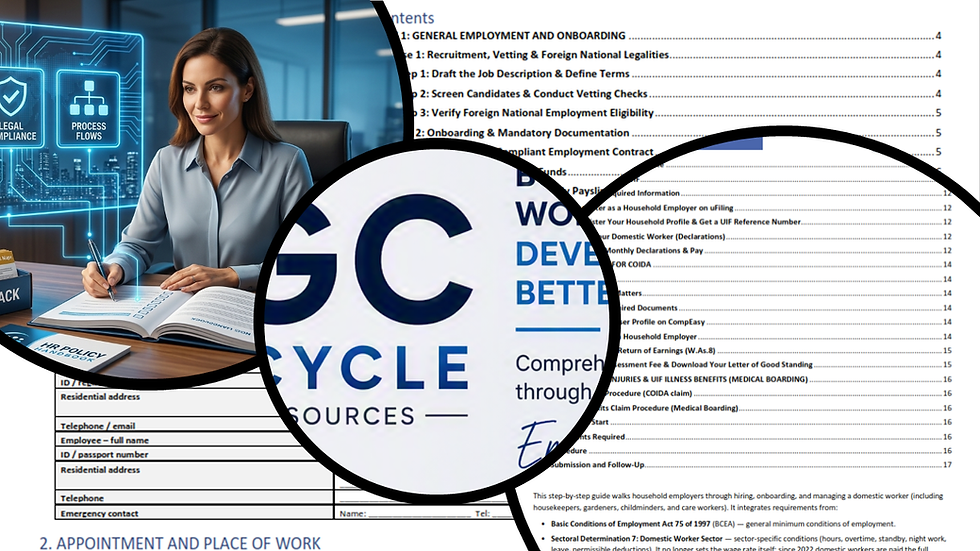
This is where a Domestic Worker Compliance Pack can become your best friend. It gives you practical tools for managing employment responsibilities without turning your home into an HR department.
Good compliance is not about drowning yourself in paperwork. It is about knowing what you need, recording it properly, and keeping everything organised.
A simple DigitalHR approach can make this even easier. You can maintain important employment information electronically and find documents when needed.
Most importantly, good compliance protects both you and your domestic worker. It creates clarity about expectations, responsibilities, working arrangements, and employee rights.
What Domestic Worker Compliance Really Means
Domestic worker compliance means meeting the employment obligations that apply to your household employee. These obligations include several important areas of the employment relationship.
You need to consider working hours, wages, leave, employment contracts, deductions, termination, and recordkeeping.
You should also understand the rules that apply specifically to domestic workers. South African employment legislation provides important protections for people employed in private households.
Compliance therefore starts before your domestic worker begins working. You should agree on employment conditions and record those conditions clearly.
A written employment contract gives both parties something reliable to refer back to. It can prevent confusion about working hours, duties, pay, leave, and other arrangements.
Your Domestic Worker Compliance Pack should help you manage these basics in one convenient place.
Think of it as your household HR toolbox. You would not fix a leaking tap without the right tools. The same principle applies to employment administration.
You should also remember that compliance is not a once-a-year activity. Employment arrangements can change over time.
For example, working hours may change when children start school. Duties may also change when household circumstances change.
Whenever important employment conditions change, you should record those changes. Keeping information current makes future conversations much easier.
The Essential Employment Documents in the Domestic Worker Compliance Pack
A good employment relationship starts with good documentation. Fortunately, you do not need a filing cabinet that looks like it belongs in a government department.
You need practical documents containing the information relevant to the employment relationship.
Your employment contract should be one of your most important documents. It should clearly record the agreed employment conditions.
These conditions can include duties, working hours, remuneration, payment arrangements, leave, and termination requirements.
You should also keep copies of relevant identification and employment information. Proper records help you administer the relationship accurately.
A leave record is another useful document. It allows you to record leave taken and monitor available leave balances.
You should also maintain suitable records of payments. These records provide useful evidence of what was paid and when it was paid.
Where deductions are made, you should record them clearly. You should never make unexplained deductions from an employee's remuneration.
Other useful documents may include a disciplinary record, grievance record, warning template, and termination checklist.
The exact documents you need can depend on your employment arrangement. However, organised records make compliance significantly easier.
A Domestic Worker Compliance Pack brings these practical tools together. Instead of creating documents whenever something happens, you have a structured system ready.
This is one area where DigitalHR can be particularly helpful. Digital records can reduce lost paperwork and make important information easier to retrieve.
You should still protect personal information carefully. Employment records can contain sensitive information and should not be casually shared.
Leave, Working Hours and Pay Records
Leave is one of those employment topics that can become confusing surprisingly quickly. Keeping proper records makes it much easier.
Your domestic worker may qualify for different types of statutory leave. These can include annual leave, sick leave, and family responsibility leave.
Certain circumstances may also involve maternity, parental, adoption, or commissioning parental leave.
You should not rely on memory when tracking leave. Even the best memory can become surprisingly creative after several months.
Record when leave was requested, approved, taken, and returned from. This creates a clear history for both you and your employee.
Working hours also need careful attention. You should agree on normal working hours and record them clearly.
You should understand requirements concerning ordinary hours, meal intervals, rest periods, and overtime. Different arrangements can have different implications.
Public holidays also deserve attention. You should understand how work performed on public holidays should be treated.
Pay records are equally important. You should keep evidence of remuneration paid and the dates payments were made.
Where applicable, you should also understand your UIF responsibilities. Registration and contribution obligations should not be ignored.
Non-compliance can create financial consequences and administrative problems. It can also become particularly stressful when an employee leaves or a dispute arises.
Your Domestic Worker Compliance Pack can help you keep leave, working hours, and payment information together.
A simple record today can save you a much bigger headache tomorrow.
How the Domestic Worker Compliance Pack Helps Employer Mistakes to Avoid
One common mistake is relying entirely on verbal agreements. Verbal arrangements may seem friendly and convenient, but they can create uncertainty later.
You may remember an agreement differently from your employee. Written records reduce this risk considerably.
Another common mistake is failing to update documents. Your original agreement may no longer reflect the actual working arrangement.
For example, perhaps your employee now works different hours. Perhaps duties have changed or remuneration has been adjusted.
You should record significant changes rather than relying on informal conversations.
Poor leave tracking is another frequent problem. You might know that someone took leave, but remembering exact dates months later can be difficult.
Another mistake is paying correctly but keeping inadequate payment records. Good payment records provide useful evidence if questions arise.
You should also avoid making deductions without understanding whether they are lawful. Unauthorised deductions can create serious employment problems.
Ignoring UIF responsibilities can also expose employers to potential enforcement action. You should establish your obligations and keep appropriate records.
Perhaps the biggest mistake is assuming that household employment is too informal for employment law. Domestic work is still employment, and statutory protections can apply.
What Penalties Can You Face for Non-Compliance?
Non-compliance does not always result in an automatic fine. The consequences depend on the specific requirement, circumstances, and enforcement process.
However, ignoring employment obligations can become expensive. You could face claims for unpaid wages, overtime, leave, or other amounts.
An employee may also approach the CCMA where the dispute falls within its jurisdiction. This can create costs, time pressure, and considerable administrative stress.
Serious breaches can also expose an employer to enforcement proceedings under applicable labour legislation.
UIF non-compliance can create additional financial exposure. Outstanding contributions may become payable, together with applicable interest or penalties.
Failing to comply with minimum wage requirements can also result in claims for underpayment. You should therefore review the applicable minimum wage regularly.
Incorrect termination procedures can create another significant risk. A dismissal that does not meet fairness requirements may be challenged.
The potential consequences therefore extend beyond a simple fine. You could face back-pay claims, compensation orders, legal costs, and administrative penalties.
The best approach is prevention. You do not want to discover an important compliance requirement after receiving a complaint.
Your Domestic Worker Compliance Pack provides a practical starting point for managing these responsibilities.
It can help you establish better records, clearer procedures, and more consistent employment practices.
A Simple Compliance Habit Can Make a Big Difference
You do not need to become an employment-law expert to manage your household employment responsibly.
You simply need a sensible system that helps you understand your responsibilities and keep appropriate records.
Review your employment documents regularly. Check leave records, payment records, working arrangements, and other important information.
Keep your records organised and update them when circumstances change.
Most importantly, treat compliance as part of good employment management rather than an annoying administrative chore.
A well-organised Domestic Worker Compliance Pack can make that process considerably easier.
With the right documents and habits, you can manage your household employment with greater confidence and fewer unpleasant surprises.
SEO note: I deliberately avoided stating fixed penalty amounts because penalties can depend on the specific breach and applicable legislation. For a South African article, it is safer to verify current statutory amounts before publishing them.
Make Domestic Worker Compliance Simple
Don't leave your household employment records to chance. Get the Domestic Worker Compliance Pack and simplify contracts, leave records, working hours, payments, and essential compliance documentation.
Practical. Easy to use. South Africa-focused.
👉 Get your Domestic Worker Compliance Pack today and take the stress out of DigitalHR compliance.


Comments